ENV-DUSTOptical Dust Sensor Probe for data centers, server rooms & cabinets
Compact & affordable optical dust sensor, made in Japan.
Measures total dust density — PM2.5 and PM10 combined.
Range of 0 to 600 µg/m³, sensitivity 100 µg/m³.
Optical measurement — nothing to consume or replace.
Powered by the base unit — no local power, no batteries.
Optional UL Recognized version (ENV-DUST-L).
Plug & play — SNMP, Modbus TCP, BACnet IP & MQTT ready.
Measures total dust density — PM2.5 and PM10 combined.
Range of 0 to 600 µg/m³, sensitivity 100 µg/m³.
Optical measurement — nothing to consume or replace.
Powered by the base unit — no local power, no batteries.
Optional UL Recognized version (ENV-DUST-L).
Plug & play — SNMP, Modbus TCP, BACnet IP & MQTT ready.
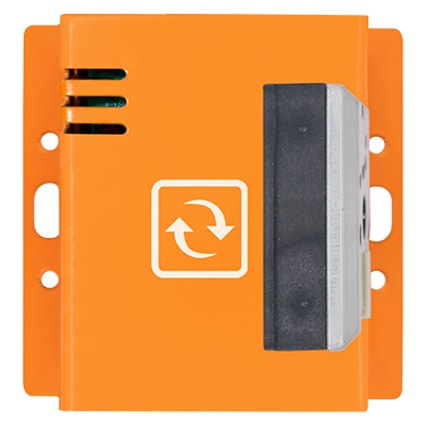
Optical Measurement
A compact optical probe made in Japan. Nothing is consumed or collected, so there is no cassette to change and no sample to send away.
Total Dust Density
PM2.5 and PM10 combined as a single density figure, from 0 to 600 µg/m³ at 100 µg/m³ sensitivity.
Why Monitor Dust
Dust causes equipment failure, reduced efficiency and higher maintenance cost — and it accumulates invisibly until it doesn't.
Filters, Airflow & Cooling
Particles clog filters and obstruct airflow, so a rising dust level is an early indicator that cooling capacity is being quietly eroded.
Particles & Corrosion
Air particles are one of the four main contributors to corrosion. ANSI/ISA G1 environments call for particles to be held below 70 µg/m³.
Where to Deploy
Cabinets, intake plenums, doorways and near building work — the places where particle levels diverge most from the room as a whole.
UL Recognized Option
The ENV-DUST-L is the UR 61010 (UL Recognized) version, for installations where that is a condition of acceptance.
How It Works
Connects to the base unit over standard network cable. The base unit is standalone, with no PC or software required.
Flexible Integration
Readings and alerts over SNMP GET & TRAPS, Modbus TCP, BACnet IP, MQTT, XML and JSON.
Guided Video Tour
A short walkthrough of the optical dust sensor and how it is deployed.
Technical Specifications
View measurement range, sensitivity, particle coverage, power and connectivity specifications for the ENV-DUST.
Related Sensors
Where finer particle resolution or a full G1 environment picture is needed, ENV-PARTICLE and ENV-CORROSION complete the set.
Optical Measurement
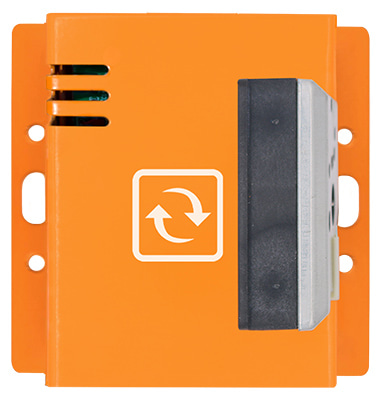 The ENV-DUST is a compact and affordable optical dust sensor, made in Japan, designed for monitoring dust particles in data centers, server rooms and cabinets.
- Nothing consumed: the measurement is optical, so there is no filter cassette to weigh, replace or send to a laboratory.
- Continuous: particle levels are reported in real time rather than as the average over a sampling period.
- Compact: small enough to mount inside a cabinet, where the particle level actually matters for the equipment.
UL Recognized Option
 An optional UR 61010 (UL Recognized) version of the sensor is available as the ENV-DUST-L.
- Same measurement performance as the standard ENV-DUST.
- For installations where UL Recognition is a condition of acceptance by the AHJ, the insurer or the project specification.
- Specify the -L part number at order time.
How It Works
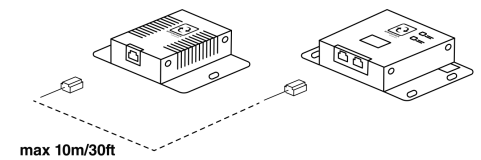
The ENV-DUST connects to the base unit, which makes it an Ethernet sensor. The base unit is a standalone device with its own IP address in your network. On its own it monitors the sensor and triggers alerts via email, SNMP or optional SMS when needed.
There is no software or PC required for the sensor to run.
With our optional Monitoring Software you can centrally monitor sensors with trending and more. This is optional and not required.